Tell us what has changed.
Your concerns, timeline, scalp symptoms and previous care help put your photographs in context.
Your photographs show where your hair is changing. Your history helps explain what deserves a closer look.
Photographs and your history can provide a starting point for a conversation about your care.
Explore the photo guide or speak with our team about your hair concerns.
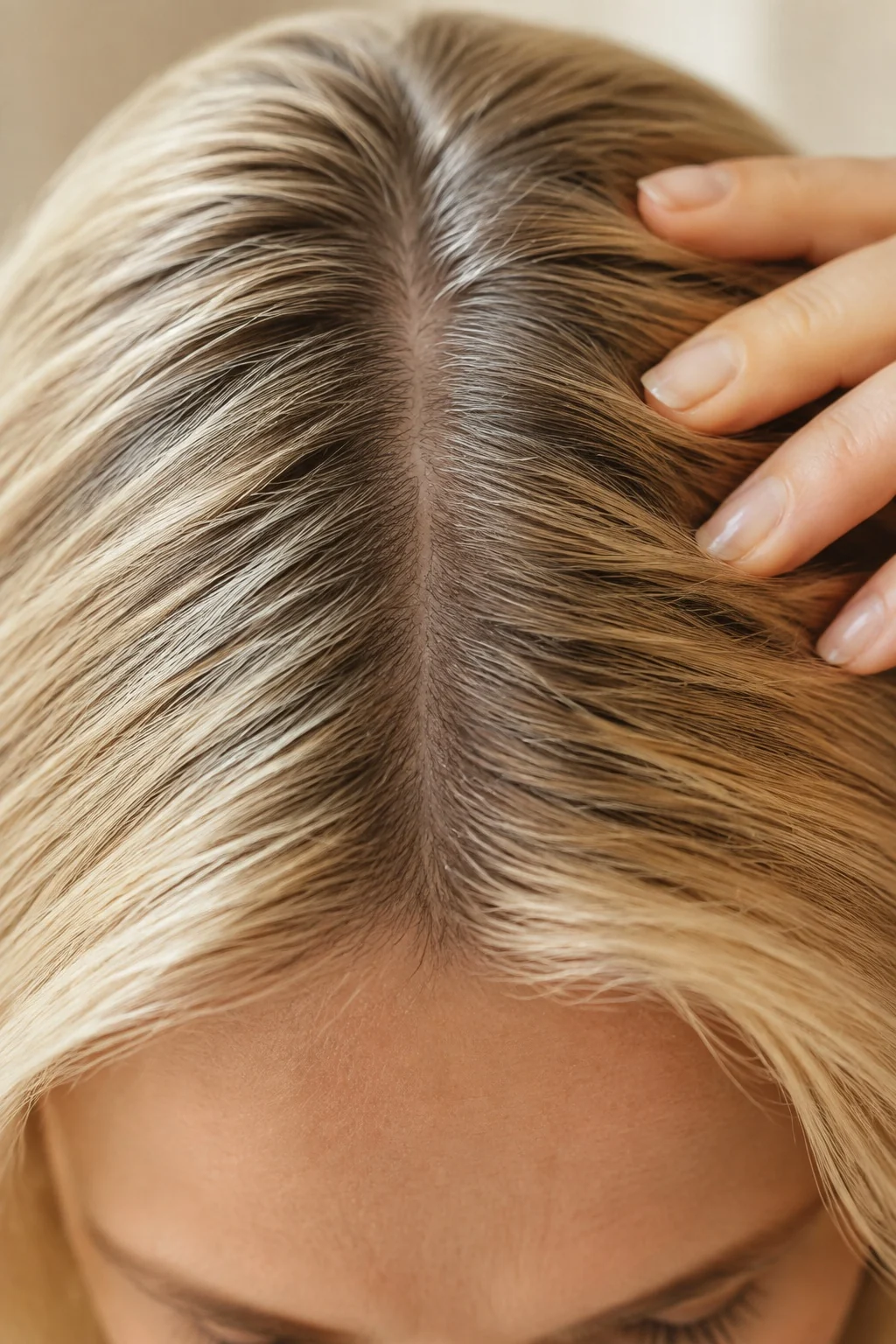
Your concerns, timeline, scalp symptoms and previous care help put your photographs in context.
Follow the guide for your hairline, temples, top and crown. Good light and consistent angles matter.
A visual overview can organize your questions. An individual evaluation guides decisions about care.
Photographs and your history offer a starting point. Here is what a photo-based view can help describe.
Where reduced coverage appears in your hairline, temples, part and crown.
How much scalp is visible and how its appearance varies across your photographs.
Broad characteristics such as texture and perceived thickness, within the limits of a photo.
A consistent set of images provides a reference for future comparisons.
HairHealth HairScan uses ordinary photographs and a questionnaire to describe broad visual characteristics.
HairHealth ScalpScan uses images from a trichoscope. Follicle-level measurements require that separate imaging, not just phone photographs.
Assessment technology: HairHealth.ai. Availability of individual services will be confirmed with our team.
Explore a sample report structure. Each part adds context to the next.
Report structure illustration. No patient data shown.
 YOUR HAIR OVERVIEW
A summary of the hair pattern visible in the photographs you submit. Image quality, angle and lighting affect what can be seen.
The hairline, temples, part and crown can show different patterns. A regional view helps organize the areas you want to discuss.
When the change began, scalp symptoms, health changes and previous care add context that a photograph cannot provide.
Discuss whether an examination or additional assessment would help, and how you will document future changes consistently.
See what to include in each photo. Move through the guide at your own pace, then add your photographs below.
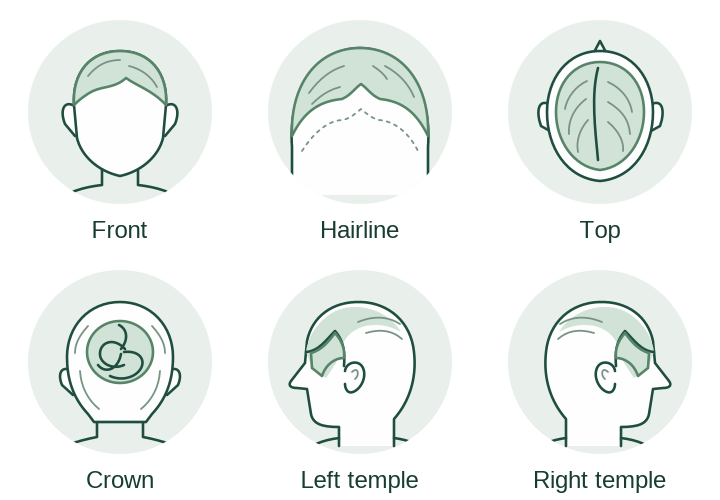
Front · Hairline · Top · Crown · Left temple · Right temple
Face the camera directly, with your entire hairline visible. Keep the camera at eye level and move hair away from your face.
Follow the guide, then prepare your photos below. Nothing is submitted from this page.
Choose a photo for each view. You can review, replace or remove it before continuing.
Private to this browser tab. Your photos are not uploaded, saved or sent to our team. Reloading or closing this page clears your selections.
JPEG, PNG or WebP. Up to 10 MB and 30 megapixels per photo. For HEIC or HEIF, export a JPEG or PNG first. Your original files stay unchanged.
0 of 6 photos prepared.
Your full hairline, facing the camera.
No photo selected
A closer view of the front hairline.
No photo selected
The top of your scalp and natural part.
No photo selected
The crown at the back of your head.
No photo selected
Your left temple and side hairline.
No photo selected
Your right temple and side hairline.
No photo selected
Small details make your photographs more useful.
Read the full photo guideUse even lighting, a plain background and a clean camera lens. Keep filters switched off.
Follow the 6 views in the guide. Ask someone to help with the top and back of your head.
Note when the change began, what you have tried and anything relevant in your health history.
This is an educational assessment, not a diagnosis. Whether any option is appropriate for you is determined by a licensed clinician after an individual evaluation.
A photo assessment is one part of the picture. Medical history and examination help determine whether more investigation is appropriate.
How hair loss is assessedNo. The initial assessment is based on photographs and your answers. It does not measure hormone levels, nutrient status or genetics. A clinician may recommend separate investigations when appropriate.
Not everyone does. Your history, symptoms and examination help a clinician decide whether testing for possible contributors would be useful. There is no universal lab panel included with this photo assessment.
A visual assessment can describe a pattern. Diagnosis may require a clinical examination and, in some cases, tests. A photograph alone cannot explain every cause of hair loss.
Arrange a professional evaluation. Sudden or patchy loss, pain, sores or a persistently irritated scalp deserve individual attention.
The products we use are not approved by the FDA or licensed for the prevention, treatment, diagnosis, mitigation and/or cure of any disease or condition. All statements and opinions provided are for educational and informational purposes only and we do not diagnose or give medical nor legal advice. All products are for cosmetic/topical, research and/or homologous use only.
Individual experiences vary. No outcome is promised or guaranteed.
Images and video are illustrative. They do not show treatment results or identify patients or care providers.